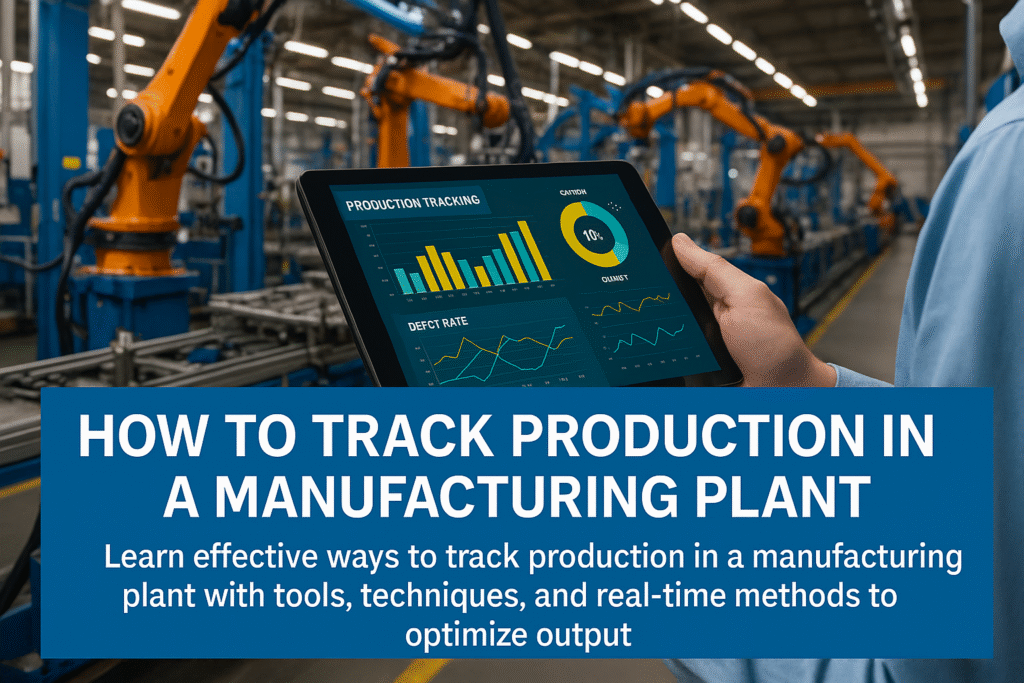
In the fast-paced world of manufacturing, the capability to precisely track production isn’t just a inexpensive benefit — it’s a need. For factories targeting to increase competence, reduce waste, and hit delivery goals, applying the correct production tracking strategies can be the difference between progress and inaction.
This guide provides a comprehensive, actionable overview of how to track production in a manufacturing plant effectively. Whether you’re managing a large-scale operation or a small facility, production managers, quality assurance teams, and plant supervisors will find practical insights designed for measurable success.
What Does Production Tracking Mean in Manufacturing?
Production tracking refers to the continuous monitoring and documentation of every stage in the manufacturing process. From raw material input to the finished product, tracking ensures full visibility and control over operations, performance, and output.
Why It Matters
- Enables real-time decision-making
- Improves inventory and material flow
- Reduces production delays and bottlenecks
- Enhances product quality and consistency
- Supports lean manufacturing and Six Sigma initiatives
Shop here on Etsy:
https://www.etsy.com/shop/SheetsMakerPro
Buy this time and motion/productivity tracker on Etsy:
https://sheetsmakerpro.etsy.com/listing/4327428080/google-sheets-time-and
Key Components of a Production Tracking System
To effectively track production, manufacturing plants must build a strong foundation using both physical tools and digital solutions. A reliable system usually includes:
1. Work Orders and Production Schedules
- Acts as the blueprint for tracking
- Establishes timelines, output goals, and staffing needs
2. Barcode or RFID Tagging Systems
- Tracks movement of materials and products
- Reduces human error in data entry
3. Manufacturing Execution Systems (MES)
- Provides real-time shop floor visibility
- Integrates with ERP for full process automation
4. IoT Sensors and Smart Devices
- Monitors machine performance, temperature, speed, and downtime
- Sends alerts for maintenance or anomalies
5. Human-Machine Interface (HMI) Panels
- Allows operators to input data directly at the workstation
- Improves communication between machines and personnel
6. Cloud-Based Dashboards
- Centralizes data from multiple sources
- Offers customized reporting and trend analysis
Step-by-Step: How to Track Production in a Manufacturing Plant
The process of tracking production can be broken down into clear, manageable phases. Here’s a step-by-step guide aligned with industry best practices:
Step 1: Define KPIs (Key Performance Indicators)
Before tracking begins, the plant must define success metrics. Common KPIs include:
- Units produced per shift
- Downtime percentage
- Scrap rate
- First pass yield (FPY)
- On-time delivery rate
Step 2: Map the Production Workflow
- Identify all stages in the production line
- Note where inputs become outputs
- Highlight potential problem areas for tracking
Step 3: Install Data Collection Tools
Depending on your plant’s size and budget, options include:
- Manual logbooks and checklists
- Tablets or mobile apps for operator input
- Fully automated sensors for machine-to-cloud communication
Step 4: Integrate Systems
- Link MES with ERP systems for full visibility
- Ensure compatibility between old machinery and new software
- Automate data flow to minimize human intervention
Step 5: Monitor in Real Time
Use dashboards to:
- Track hourly production rates
- Compare planned vs. actual output
- Detect bottlenecks or idle equipment
Step 6: Analyze and Report
- Generate daily, weekly, and monthly reports
- Perform root cause analysis for inefficiencies
- Share insights with relevant departments
Step 7: Continuously Improve
- Implement corrective actions from report findings
- Use real-time data to support lean and Kaizen initiatives
- Monitor progress on improvement goals
Essential Tools for Production Monitoring
Modern factories blend traditional and digital tools to achieve effective production tracking.
Manual Tools
- Whiteboards and paper log sheets
- Kanban cards and color-coded bins
- Stopwatches and manual counters
Digital Tools
- MES platforms like Plex, Siemens Opcenter, or FactoryTalk
- ERP software with manufacturing modules (e.g., SAP, Oracle NetSuite)
- OEE (Overall Equipment Effectiveness) calculators
- Custom dashboards using Power BI or Tableau
Common Challenges in Production Tracking
Despite its benefits, many manufacturers face difficulties in adopting or optimizing tracking systems.
Most Frequent Problems:
- Data Overload: Too much information leads to analysis paralysis
- Human Error: Manual entries are prone to mistakes
- Disconnected Systems: Legacy machines may not integrate with new platforms
- Resistance to Change: Staff may fear being monitored or replaced
- Poor Training: Users must be properly trained to operate tools effectively
Best Practices for Efficient Production Tracking
To enhance production tracking effectiveness, apply these proven practices:
- Involve all departments (quality control, maintenance, logistics)
- Standardize data input across the plant
- Automate data collection wherever possible
- Use real-time dashboards for transparency
- Review KPIs regularly to align with goals
- Hold daily stand-up meetings to keep teams informed
Real-World Example: Medium-Scale Electronics Factory
A 300-employee electronics plant in the Philippines upgraded from Excel-based logs to a hybrid MES and barcode system in 2023. After implementation:
- 15% reduction in unplanned downtime
- 23% faster order fulfillment
- 12% improvement in first-pass quality
- Higher accountability and morale across the workforce
Top Benefits of Effective Production Tracking
- Increased Productivity: Operators meet goals more efficiently
- Better Inventory Control: Material use aligns with real demand
- Reduced Costs: Waste and rework are minimized
- Data-Driven Decisions: Insights inform smarter scheduling
- Improved Accountability: Employees stay aligned with standards
How to Choose the Right Production Tracking System
There’s no universal solution — tailor your system to your operation’s needs.
- Company Size: Start with manual or hybrid tools if small
- Budget: Choose cloud-based solutions for cost-effectiveness
- Scalability: Ensure the system can grow with your business
- Integration: Look for ERP and CRM compatibility
- User-Friendliness: Easy adoption encourages long-term use
- Support: Prioritize vendors with strong technical support
Production Tracking Checklist
Evaluate your current system with this checklist:
- Are your KPIs clearly defined and measurable?
- Is your workflow mapped with identified tracking points?
- Are you using digital or manual tools (or both)?
- Is your system integrated with ERP or MES platforms?
- Do you monitor production in real time?
- Are visualizations examined frequently and acted upon?
- Is training provided to all relevant staff?
- Are you continuously improving based on the data?
Shop here on Etsy:
https://www.etsy.com/shop/SheetsMakerPro
Buy this time and motion/productivity tracker on Etsy:
https://sheetsmakerpro.etsy.com/listing/4327428080/google-sheets-time-and
The Future of Production Tracking
Technologies like AI, machine learning, and Industry 4.0 are shaping next-generation tracking systems.
Emerging Trends:
- Predictive analytics to avoid downtime
- AI-driven process improvements
- Digital twins for virtual testing
- AR for operator training
- Edge computing for faster local data processing
Real-Time Tracking: A Game-Changer
Shifting from end-of-day reports to real-time monitoring transforms how manufacturers operate.
Advantages:
- Instant alerts on failures or shortages
- Dynamic scheduling adjustments
- Operator feedback in real time
- Early detection of quality issues
Digital Transformation: From Paper to Platform
Many factories still rely on paper — but signs like frequent miscommunication, data loss, and reporting delays indicate it’s time to digitize.
Benefits of Going Digital:
- Immediate access to performance data
- Accurate inventory tracking
- Enhanced interdepartmental communication
- Easier audits and compliance
How to Get Employees On Board
Resistance to new systems is common but manageable with the right approach.
Tips for Smooth Adoption:
- Explain the purpose behind the tracking
- Provide hands-on training and support
- Involve workers in tool selection
- Recognize productivity improvements
- Prioritize user-friendly systems
Industry-Specific Tracking Considerations
Different industries have specialized needs:
Food Manufacturing
- Temperature and hygiene tracking
- Batch and expiration traceability
Electronics
- Component-level tracking
- ESD compliance
Automotive
- Emphasis on OEE
- Integration with JIT systems
Textile and Garment
- Track sizes, styles, and WIP status in real time
Case Study: Lean Tracking in Furniture Manufacturing
A Cebu-based furniture company adopted a cloud-based MES in 2024, transitioning from a manual system. Results included:
- 21% increase in OEE
- 17% reduction in scrap
- 11% rise in productivity
- 40% cut in lead time
Questions to Ask Before Implementing a Tracking System
Before committing to any system, ask:
- What are our top 3 production pain points?
- Are hidden inefficiencies costing us money?
- How much time is spent on manual logging?
- Do we have resources to support a new system?
- Will this system scale in the next five years?
The Role of AI in Production Tracking
AI brings intelligence to your tracking system:
- Predictive maintenance
- Cycle time optimization
- Demand-based production
- AI-assisted visual inspection
Metrics to Monitor on Dashboards
Effective dashboards reveal what’s working — and what’s not.
Key Metrics:
- Units produced vs. goal
- OEE: availability, performance, quality
- Downtime analysis
- Scrap rate
- Cycle time
- Operator productivity
Integration with Supply Chain and Inventory
Production tracking becomes more powerful when linked with supply chain systems.
Benefits:
- Real-time inventory alignment
- Automated purchase orders
- Synchronized delivery and production
- Better financial forecasting
Environmental and Compliance Benefits
Modern tracking supports sustainability and regulation compliance.
Environmental Gains:
- Monitor energy and resource use
- Track emissions
- Optimize machine use
Compliance Advantages:
- Meet ISO, FDA, and GMP requirements
- Ensure product traceability
- Maintain audit-ready records
Final Summary: Transform Your Plant with Production Tracking
Implementing a modern production tracking system can radically improve how your manufacturing plant operates.
Key Takeaways:
- Tracking boosts efficiency, quality, and visibility
- Real-time monitoring is essential for agility
- Tools should match your size, budget, and goals
- Employee engagement and training are vital
- Integration drives long-term ROI
By leveraging the right tools and practices, your factory can meet today’s demands — and prepare for tomorrow’s challenges.
Frequently Asked Questions(FAQ):
How to Track Production in Manufacturing
Tracking production in manufacturing involves systematically collecting data at each stage of the production cycle—from raw material intake to final product packaging. Manufacturers typically begin by defining key performance indicators (KPIs) such as units produced per shift, downtime, and scrap rate. These KPIs are then monitored using digital tools like Manufacturing Execution Systems (MES), Internet of Things (IoT) sensors, and cloud dashboards. By integrating these tools with the plant’s ERP system, real-time production tracking becomes possible, allowing decision-makers to respond immediately to inefficiencies or quality issues. This approach not only ensures accuracy but also supports lean and Six Sigma initiatives.
What Is Used to Track a Production Process?
Modern manufacturing plants use a combination of hardware and software to track production processes efficiently. Common tools include barcode and RFID systems for material tracking, MES platforms for real-time floor visibility, and IoT sensors to monitor equipment status and environmental conditions. In addition, Human-Machine Interface (HMI) panels allow operators to input data directly from the floor, while cloud-based dashboards aggregate this data into actionable insights. These tools enable manufacturers to measure production velocity, machine uptime, and quality metrics, making it easier to manage production schedules and maintain consistency across shifts.
How to Monitor a Production Process
Monitoring a production process requires continuous oversight of equipment performance, labor productivity, and workflow efficiency. This is achieved through real-time dashboards that display KPIs such as cycle time, throughput, OEE, and defect rates. Operators and supervisors rely on mobile devices, control panels, and sensor data to track current conditions against planned output. Alerts can be set to notify teams of deviations, bottlenecks, or machine anomalies. By using this proactive monitoring approach, factories reduce unplanned downtime and improve both short-term output and long-term operational planning.
How to Evaluate a Manufacturing Process
Evaluating a manufacturing process involves assessing both qualitative and quantitative metrics to determine efficiency, cost-effectiveness, and product quality. Key evaluation methods include root cause analysis, time-and-motion studies, and OEE assessments. Production tracking data is essential in this evaluation—it helps identify where delays occur, where waste is generated, and which steps deviate from standard operating procedures (SOPs). Combined with historical benchmarks and industry standards, manufacturers can evaluate if their processes are optimized or in need of redesign. This continuous improvement mindset is central to agile manufacturing and Industry 4.0 transformation.
Industry Expertise Behind Effective Implementation
Experts in industrial engineering and manufacturing management agree that successful production tracking goes beyond simply installing software. It involves a strategic alignment of process mapping, real-time data collection, and employee engagement. Industry leaders, including certified Six Sigma Black Belts and Lean Manufacturing consultants, emphasize the importance of customizing tracking systems to the plant’s specific process flow, layout, and production cadence. With decades of on-ground experience, these professionals note that even the most advanced tools underperform without a structured rollout plan that includes risk mitigation, pilot testing, and iterative adjustments based on performance feedback.
Proven Trust Through Industry Certifications and Results
Organizations that implement certified production tracking systems—such as those compliant with ISO 9001 or IATF 16949—gain more than just operational visibility; they earn trust from global clients and regulators. Plants that leverage data from MES platforms and integrate with ERP systems often experience measurable improvements within 90 days. For example, case studies published by institutions like the Manufacturing Leadership Council and World Economic Forum highlight double-digit gains in Overall Equipment Effectiveness (OEE), reduced waste levels, and improved audit readiness. These results validate not only the tools used but also the strategic commitment of manufacturers to transparency, efficiency, and continuous improvement.